
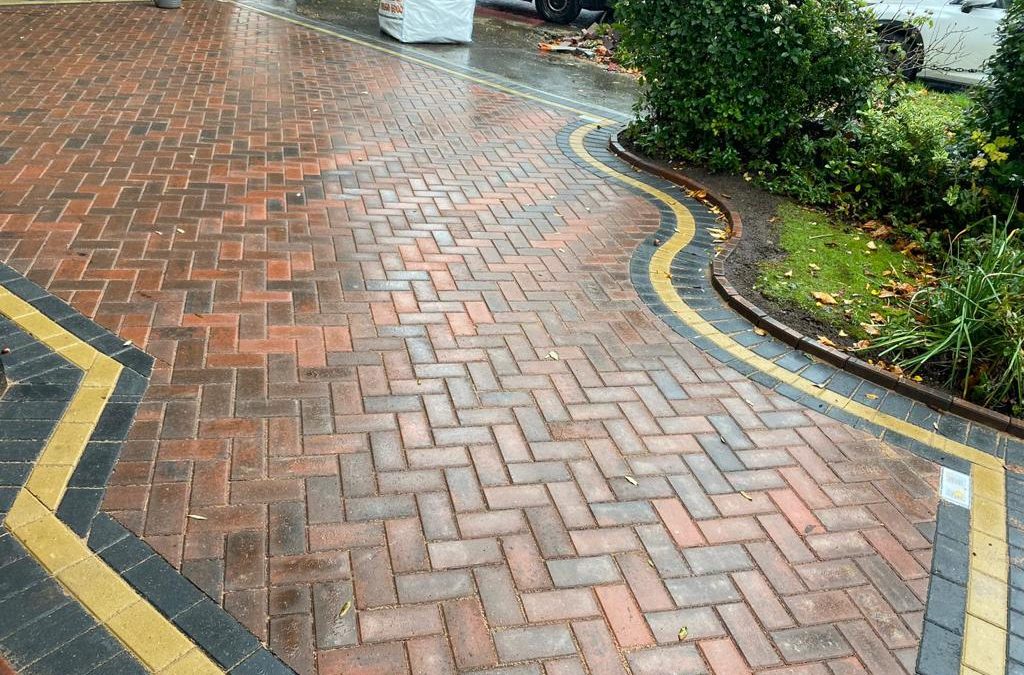
Searching for block paving East Grinstead specialists usually means you are weighing up more than just price. Block paving is one of the most popular driveway surfaces in the UK because it combines strength, design flexibility and easy repairability, but the quality of the finished result depends almost entirely on the sub base, the blocks used and the skill of the installer. This guide covers everything East Grinstead homeowners need to know before committing to a block paving East Grinstead project, from pattern choices and clay soil considerations to realistic pricing and how to avoid the most common installation mistakes.
What Makes Block Paving Different From Other Driveway Surfaces
Unlike tarmac or resin, which are laid as a single continuous surface, block paving is built from individual concrete or clay blocks laid onto a compacted sub base and locked together with jointing sand. This construction method gives block paving two major advantages. First, it flexes slightly under load rather than cracking outright, which suits ground movement common on East Grinstead’s clay heavy soil. Second, individual blocks can be lifted and replaced if damaged or stained, without needing to resurface the whole driveway. For homeowners who want a surface that looks sharp for decades and is genuinely repairable, block paving remains hard to beat.
Choosing the Right Block Paving Pattern
The laying pattern affects both the strength and the visual character of your driveway. The table below outlines the most common options requested by East Grinstead homeowners.
| Pattern | Strength Rating | Best Suited To |
|---|---|---|
| Herringbone (45 degree) | Highest, recommended for driveways | Areas with regular vehicle turning and braking |
| Herringbone (90 degree) | Very high | Straight driveways with limited turning |
| Basketweave | Moderate | Patios and low traffic paths |
| Stretcher Bond | Lower, decorative use only for vehicles | Borders, edging details and pedestrian areas |
Herringbone is almost always recommended for the main body of a driveway because the interlocking angle resists the sideways force created when a car turns its wheels while stationary, which is the leading cause of block creep in poorly designed layouts.
Block Paving Materials: Concrete, Clay and Permeable Systems
Most driveways in the area use concrete block pavers, which offer the widest range of colours, sizes and price points, including well known ranges from manufacturers such as Marshalls, Brett and Tobermore. Clay pavers cost more but hold their colour far longer, since the pigment runs through the entire block rather than sitting on the surface. For homeowners focused on drainage compliance, permeable block paving systems use specially shaped blocks with wider joints filled with permeable jointing material, allowing rainwater to pass through into a permeable sub base rather than running off into the street.
Realistic Cost of Block Paving in East Grinstead
Block paving typically costs more than tarmac but less than premium natural stone, and pricing depends heavily on ground preparation, block choice and pattern complexity. The table below gives an approximate guide for the East Grinstead area.
| Driveway Size | Standard Concrete Block Paving | Premium or Permeable Block Paving |
|---|---|---|
| Small (up to 30m2) | £2,800 to £4,000 | £3,600 to £5,200 |
| Medium (30 to 60m2) | £4,500 to £7,000 | £5,800 to £9,000 |
| Large (60m2 plus) | £7,000 upwards | £9,000 upwards |
These figures assume a full excavation and new sub base rather than laying over an existing surface, which is not recommended for long term durability. Always ask whether a quote includes excavation depth, edge restraints, membrane and jointing sand, since omitting any of these is a common way for quotes to appear artificially low.
Why Sub Base Depth Matters More on East Grinstead’s Clay Soil
East Grinstead and the surrounding villages sit on a mix of clay and greensand that retains water and expands and contracts with the seasons. A sub base that would be adequate on sandy or chalky ground elsewhere can fail within a couple of years here if it is too shallow. For domestic driveways carrying cars, a compacted sub base of 150mm is generally considered a minimum, and many experienced local installers use 200mm or more on clay dominant plots to guard against seasonal ground movement. Skipping this step is the single biggest cause of the sunken, uneven block paving that we are most frequently called out to repair.
The Correct Installation Process Step by Step
- Site survey: Assessing ground levels, existing drainage and access before quoting.
- Excavation: Removing the existing surface and excavating to the correct depth for the local soil type.
- Edge restraints: Concrete haunching or kerb units installed to prevent the blocks spreading outward over time.
- Sub base compaction: MOT type 1 stone laid in layers and compacted with a vibrating plate to create a stable base.
- Laying course: A screeded bed of sharp sand laid to the correct fall, typically 1 in 60 to 1 in 80, to direct water away from the property.
- Block laying: Blocks laid to the chosen pattern, cut neatly at edges and around drainage or manhole covers.
- Jointing: Kiln dried sand vibrated into the joints to lock the surface together and prevent movement.
- Final inspection: Surface checked for level and drainage before handover.
Drainage Rules and SuDS Compliance for Block Paving
Under current national guidance, a new or replacement driveway larger than five square metres generally requires planning permission unless it uses permeable paving or directs rainwater to a lawn, border or soakaway rather than the public drainage system. This is part of the wider push toward Sustainable Drainage Systems, known as SuDS, which aim to reduce surface water flooding as more front gardens across the country are paved over. You can check the specific requirements that apply to your property through the official Planning Portal guidance on driveways. Permeable block paving is one of the simplest ways to remain compliant without needing a separate soakaway, and technical standards for these systems are published by Interpave, the concrete block paving association, which is the recognised UK trade body for the sector.
Maintenance and Sealing: Keeping Block Paving Looking New
Block paving requires relatively little maintenance compared with natural stone, but a few habits significantly extend its life. Sweep regularly to prevent organic debris building up in the joints, which is the main cause of weed growth and moss. Top up kiln dried sand every one to two years, since traffic and rainfall gradually wash small amounts out of the joints. Sealing is optional but recommended every three to five years, as it enhances colour, reduces oil staining and makes future cleaning easier. Avoid using a pressure washer on a high setting directly into the joints, since this can strip jointing sand faster than normal wear would.
Common Block Paving Mistakes to Avoid
- Laying blocks directly onto sand without a proper compacted sub base, which almost always leads to sinking within one to two years.
- Using building sand instead of kiln dried sand for jointing, which washes out quickly in wet weather.
- Ignoring falls and levels, leading to standing water and premature block staining.
- Choosing a pattern unsuited to vehicle turning areas, which increases the risk of block creep near the entrance.
- Overlooking edge restraints, allowing the whole surface to spread and loosen over time.
How Block Paving Compares to Resin and Tarmac
Homeowners often ask whether block paving is worth the extra cost compared with resin bound or tarmac surfaces. Block paving generally costs more upfront but offers the easiest repair process of the three, since individual blocks can be swapped without leaving a visible patch, unlike resin or tarmac repairs which are rarely invisible. Resin offers a smoother, more contemporary finish with excellent permeability, while tarmac remains the most budget friendly option for larger areas. The right choice ultimately depends on whether design flexibility and easy repairs matter more to you than upfront cost.
Signs Your Existing Block Paving Needs Attention
If your current block paving is showing early signs of wear, it is often possible to restore it without a full replacement. Watch for sunken sections near gateways, joints that have lost most of their sand, persistent weed growth despite regular sweeping, or blocks that rock slightly underfoot. Catching these issues early usually means a localised repair rather than a costly full replacement.
Why Local Installation Experience Matters
Block paving that looks identical on the surface can perform very differently depending on what lies beneath it. Installers with genuine experience in East Grinstead and the surrounding Sussex and Surrey border villages understand the clay content in local soil, the typical property access constraints on older residential roads, and how to correctly grade a sloped driveway so that water runs safely away from the house rather than toward it. This is one of the main reasons homeowners are advised to ask for evidence of local project experience rather than relying solely on national advertising or the lowest quote.
Colour and Design Options for Block Paving
One of block paving’s biggest advantages over resin or tarmac is the sheer range of colour and finish options available. Buff and autumn multi blend blocks remain popular choices for East Grinstead’s many period and brick built properties, since the warm tones complement traditional brickwork rather than contrasting sharply against it. Charcoal and graphite tones suit more contemporary homes and are often paired with a lighter contrasting border to frame the driveway. Riven or textured finishes mimic the look of natural stone at a lower cost, while smooth finishes give a cleaner, more formal appearance. Many homeowners choose a mixed colour blend rather than a single flat colour, since this hides minor efflorescence, tyre marks and everyday wear far more effectively than a uniform block colour.
Areas Around East Grinstead We Regularly Work In
Demand for block paving East Grinstead installations extends well beyond the town itself. We regularly quote for and install block paving in Felbridge, Forest Row, Dormansland, Ashurst Wood, Crawley Down and Lingfield, where properties tend to share similar characteristics: mature front gardens, sloped access and a mix of older brick built homes alongside newer developments. Rural properties in these outlying areas sometimes require additional groundwork if the existing surface is gravel or unmade, since there is no previous hard base to build on, which should always be reflected clearly in the quote rather than discovered midway through the job.
Best Time of Year to Install Block Paving
Block paving can be installed in most weather conditions, but spring and early autumn generally offer the most predictable results in this part of Sussex and Surrey. Ground that is neither waterlogged from prolonged winter rain nor baked hard from summer drought compacts more evenly, which improves the stability of the sub base. Many installers see their busiest period between April and September, so booking a survey during the quieter winter months can help secure a preferred installation slot for spring, particularly for larger driveway projects that need more advance planning.
Guarantees and What to Check Before You Sign
A written workmanship guarantee should clearly state what is covered, whether that is sinking, block movement or drainage related issues caused by faulty installation, and for how long the cover applies. Most reputable installers offer guarantees of five to ten years on block paving driveways, which sits separately from any manufacturer warranty on the blocks themselves. It is also worth asking whether the guarantee transfers to a new owner if you sell the property, since a documented, transferable guarantee can be a genuine selling point when the time comes to move.
A Typical East Grinstead Block Paving Project in Practice
A common scenario we see involves a sloped driveway on an older property where the existing surface has been patched repeatedly over the years rather than properly replaced. In these cases, the original sub base is often inconsistent in depth, with soft spots where previous repairs were carried out without adequate compaction. Addressing this properly means removing the full existing surface rather than laying new blocks over the top, excavating to a consistent depth suited to the clay content of the soil, and re grading the fall so that water is directed toward a suitable drainage point rather than pooling near the property. While this adds some initial cost compared with a straightforward resurfacing job, it is the difference between a driveway that lasts twenty years and one that needs attention again within a few winters.
A Checklist for Comparing Block Paving Quotes
Because block paving quotes can vary significantly depending on what is included, it helps to compare them against a consistent checklist rather than simply looking at the bottom line figure. The table below outlines what a thorough, transparent quote should specify.
| Item | Why It Matters |
|---|---|
| Excavation depth | Determines whether the sub base will be adequate for local clay soil conditions |
| Sub base material and thickness | A thin or poor quality sub base is the leading cause of early failure |
| Edge restraints | Prevents blocks spreading and loosening at the edges over time |
| Drainage provision | Ensures compliance with SuDS requirements and prevents standing water |
| Disposal of old surface | Some quotes exclude waste removal, which can add unexpected cost later |
| Guarantee terms | Clarifies what workmanship issues are covered and for how long |
If a quote does not clearly address each of these points, it is worth asking the contractor directly before agreeing to any work, since vague or incomplete quotes are one of the most common sources of disputes once a project is underway.
Insurance and Accreditation to Look For
Beyond the quality of the quote itself, it is worth checking that any contractor carries adequate public liability insurance, ideally in the range of one to two million pounds, and can provide a copy of the certificate on request. Membership of recognised trade bodies or vetted directories, along with a track record of reviews on independent platforms rather than only testimonials hosted on the company’s own website, provides an additional layer of reassurance. For larger projects involving significant groundworks or drainage alterations, ask whether the contractor is familiar with current building regulations around surface water drainage, since this is an area where inexperienced installers most often fall short of compliance.
How Benchmark Paving Delivers Block Paving Projects
At Benchmark Paving, every block paving East Grinstead project starts with a free, no obligation site survey where we assess ground conditions, drainage and design preferences before providing a clear, itemised quote with no hidden extras. We install to a minimum 150mm compacted sub base as standard, increasing depth where clay content requires it, and we offer a full range of block paving driveways, matching brick patios and complementary groundworks and drainage so your paving, patio and garden work all meet the same standard. You can view examples of completed projects in our project gallery, or get in touch through our contact page to arrange a free quote.
Frequently Asked Questions
How long does block paving last?
With correct installation and basic maintenance, block paving typically lasts 20 to 25 years, and often longer with periodic resanding and occasional sealing.
Is block paving suitable for heavy vehicles?
Yes, provided the sub base is installed to the correct depth for the ground conditions. On clay soil common around East Grinstead, a deeper sub base than the national minimum is often recommended for driveways carrying larger vehicles.
Can damaged block paving be repaired without replacing the whole driveway?
In most cases yes, since individual blocks can be lifted and replaced or reset without disturbing the surrounding surface, which is one of block paving’s biggest practical advantages over tarmac or resin.
Do I need planning permission for block paving?
Most block paving driveways do not require planning permission if permeable materials are used or if rainwater is directed away from the public drainage system. Larger impermeable areas may require permission, so it is worth checking the Planning Portal guidance for your specific property.
What is the best block paving pattern for a driveway?
Herringbone, laid at a 45 degree angle, is generally recommended for driveways because it resists the sideways force created by turning vehicles better than basketweave or stretcher bond patterns.
How much does block paving cost compared to tarmac?
Block paving usually costs 30 to 50 percent more than tarmac for a comparable area, but offers greater design flexibility and significantly easier repairs, which many homeowners consider worth the additional upfront cost.
What is the difference between concrete and clay block paving?
Concrete block paving offers a wider range of colours and finishes at a lower price point, while clay pavers cost more but retain their colour for longer since the pigment runs through the entire block rather than sitting on the surface.
Can block paving be laid over an existing driveway?
It is not generally recommended, since laying new blocks over an old, potentially compromised sub base carries a much higher risk of sinking or movement. Full excavation and a new sub base almost always delivers a longer lasting result.
Does block paving need to be sealed?
Sealing is optional rather than essential, but it is generally recommended every three to five years for driveways, since it enhances colour, reduces oil and tyre staining, and makes routine cleaning noticeably easier over the life of the surface.
Final Thoughts on Block Paving East Grinstead Projects
Block paving remains one of the most reliable and visually versatile driveway options available to East Grinstead homeowners, provided it is installed correctly on a sub base suited to local clay soil conditions. Taking time to compare patterns, materials and quotes properly, and choosing an installer who can demonstrate real local experience, will protect your investment and give you a driveway that performs well for decades rather than years. Whether you are replacing a failing surface or starting from scratch, getting the groundwork right from day one remains the single most important factor in a block paving project that lasts. A little extra care at the quoting and planning stage, checking sub base depth, drainage provision and guarantee terms before any work begins, will save far more time and money than it costs, and it is the clearest way to tell a genuinely experienced local installer apart from a contractor simply passing through the area.
