
The best driveway material depends on your property. Appearance, parking needs, slope, drainage, budget and the maintenance you are comfortable with all matter. Block paving, resin-bound surfacing, tarmac and gravel offer different finishes and care requirements.
This guide helps Caterham homeowners compare the options. For an overview of Benchmark’s local work and to arrange a visit, see driveways in Caterham.
Driveway materials compared
| Material | Appearance and use | Care and suitability |
|---|---|---|
| Block paving | Individual units, patterns and contrasting borders. | Joints need care; individual blocks can be lifted for repairs. The base, edges and drainage need proper design. |
| Resin-bound | A continuous, textured finish in different aggregate blends. | Needs a suitable base, cleaning and product-specific care. Whole-system permeability depends on the supporting layers and drainage. |
| Tarmac | A continuous surface with a straightforward appearance. | Assess the base and drainage and allow for repairs as the surface ages. Edging can define the layout. |
| Gravel | Loose stone with a traditional appearance. | Needs containment, raking and occasional topping up. Consider slopes and pedestrian or wheelchair access. |
When to consider block paving
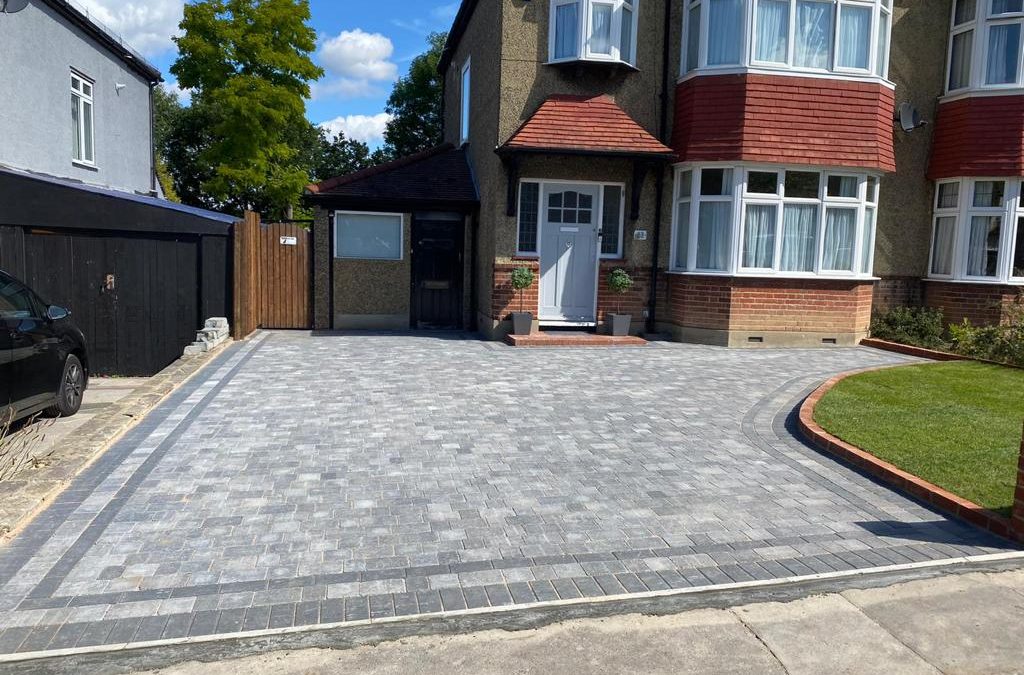
Blocks give you flexibility over colours, patterns and borders. Individual units can be lifted if a repair is needed or access is required beneath the surface. Joints and edges need ongoing care, and the supporting base affects the result.
Standard block paving and permeable block paving are different construction choices. Ask how the complete installation will manage rainwater. Explore block paving driveways.
When to consider resin-bound surfacing
Resin-bound surfacing mixes aggregate and resin before laying to create a continuous, textured finish. Discuss colour blends, borders, the condition of the existing base and the selected product’s care requirements.
A resin-bound surface does not make every driveway permeable: the supporting layers and drainage must work together. Resin-bound and resin-bonded are also different systems, so check which is being specified. Explore resin-bound driveways.
When to consider tarmac
Tarmac offers a straightforward continuous surface for everyday parking. Border details can connect it with paths and other paving. Whether an existing base can be reused requires assessment, and the drainage arrangement should be included in the specification. Explore tarmac driveways.
When to consider gravel
Gravel suits a loose-stone appearance and offers a choice of sizes and colours. Edges help contain it, but occasional raking and topping up are part of its care. Consider how stones may move on slopes and how people will walk or wheel across the surface. Drainage depends on the full construction and the ground beneath. Explore gravel driveways.
How should slope, access and drainage affect the choice?
Assess your actual plot before deciding. The gradient, turning and parking space, door thresholds, ground conditions and route for rainwater all affect the design. A material that looks suitable in a photograph may need a different specification at your property.
Explain who will use the drive and how, including regular vehicles, pushchairs or mobility needs. Ask the contractor to address these in the layout, finish and drainage proposal. See our groundworks and drainage service.
Which material needs the least maintenance?
No driveway is maintenance-free. Compare the practical jobs involved: keeping drainage clear, removing debris, cleaning, joint care, local repairs or redistributing gravel. Follow the advice for the chosen product and installation rather than relying on a general claim that a surface will stay weed-free.
Which material fits your budget?
Compare installed quotations for the same area and preparation. Excavation, disposal, base work, drainage, access and edging can change the total substantially. For a checklist of cost factors and quote details, read our Caterham driveway cost guide.
Does the material decide whether planning permission is needed?
Check the proposed surface and drainage arrangement against the Planning Portal’s front-garden paving guidance and property-specific restrictions with your local planning authority. Do not assume that choosing a material alone settles whether permission is needed.
Block paving or resin-bound: how to decide
If patterns, borders and the ability to lift individual units matter most, explore block paving. If you prefer a continuous textured appearance and aggregate colour blends, explore resin-bound surfacing. Then compare base requirements, drainage, product suitability, maintenance and complete installed quotations.
See a completed Benchmark block-paved driveway with decorative borders for a real example of that finish.
Frequently asked questions
How long will a driveway last?
There is no single lifespan for a material. The product, supporting base, installation, traffic, drainage and maintenance all affect performance. Ask about the proposed specification and any written guarantee terms.
Is resin-bound always permeable?
No. Water passing through the surface still needs a suitable route through the layers below or a designed drainage arrangement. Confirm the whole system before choosing it for permeability.
Can you help me compare options at home?
Yes. During a site visit we can discuss the layout, material choices, existing surface and practical requirements before you decide.
Arrange a driveway site visit in Caterham
Benchmark Paving is based in Caterham and our team visits customers at their properties. Tell us your project location, the approximate size and the finish you are considering. Photos of the current driveway can help with the first conversation.
Call 0800 696 5894, 0208 485 6462 or 0746 460 7167, or contact us to arrange a free site visit and no-obligation quote.
