Quick answer: For most Caterham homes, block paving is the best all-rounder for style and repairability, resin bound is best for a smooth, low-maintenance and permeable finish, tarmac is best for larger drives on a budget, and gravel is the cheapest and naturally permeable option. The right choice depends on your budget, how you use the drive, the slope of the plot, and whether you want to avoid planning permission. This guide compares every option so you can choose with confidence, then plan your project on our driveways in Caterham page.
Caterham sits on the dip slope of the North Downs, where chalk meets shrink-swell clay, and many properties have sloping or terraced front gardens. Those local conditions matter when you choose a surface, so we have factored them into the comparison below.
Driveway types compared at a glance
Here is how the main driveway surfaces compare on the factors that matter most to Caterham homeowners. For detailed pricing, see our companion guide on driveway cost in Caterham.
| Surface | Lifespan | Maintenance | Permeable? | Best for |
|---|---|---|---|---|
| Block paving | 20+ years | Medium (occasional weeds, re-sanding) | Yes, if permeable blocks | Style, strength, easy repairs |
| Resin bound | 15 to 25 years | Low (sweep and occasional rinse) | Yes | Smooth, seamless, low upkeep |
| Tarmac | 15 to 20 years | Low to medium | No | Larger drives, value |
| Gravel | Long with top-ups | Medium (raking, topping up) | Yes | Budget, period homes |
| Concrete | 20 to 30 years | Low | No (unless permeable) | Hard-wearing, plain finish |
| Natural stone or clay pavers | Decades | Medium | Depends on laying | Premium kerb appeal |
Block paving driveways
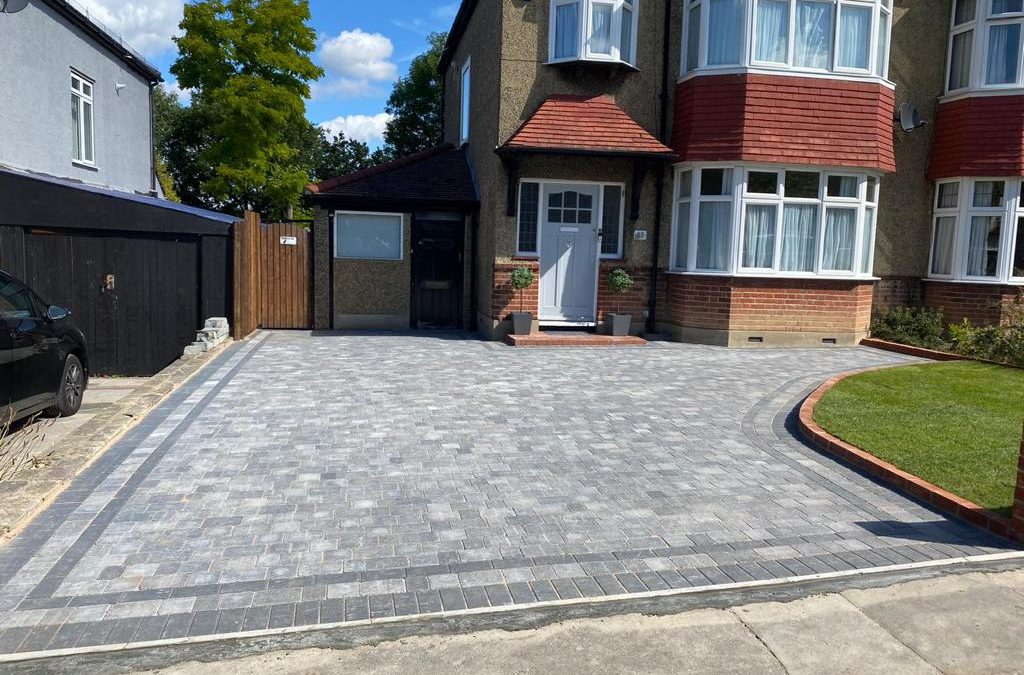
Block paving is the classic choice and the strongest all-rounder. It comes in a huge range of colours, shapes and laying patterns, it is extremely hard-wearing when laid on a proper base, and it is uniquely repairable because individual blocks can be lifted and relaid to reach services or fix a damaged area. The trade-offs are that joints can grow weeds over time and need occasional re-sanding, and a poor sub-base will let blocks sink on Caterham’s clay. Choose block paving if you want a traditional or bespoke look with long-term flexibility. See our block paving driveways page.
Resin bound driveways
Resin bound has become the modern favourite. Natural aggregate is mixed with a clear, UV-stable resin and trowelled onto a solid base to create a smooth, seamless surface with no loose stones and no joints for weeds. It is permeable, so it usually avoids planning permission, and it needs very little upkeep beyond an occasional sweep and rinse. The trade-offs are that it needs a sound base and dry conditions to install, and quality depends heavily on using genuine resin bound rather than cheaper resin bonded. Choose resin bound if you want a clean, contemporary, low-maintenance finish. See our resin bound driveways page.
Tarmac driveways
Tarmac is the practical, cost-effective choice, especially for larger driveways. It is quick to lay, hard-wearing under regular traffic, and easy to repair. The trade-offs are that it is not permeable, so a front driveway over five square metres may need planning permission or dedicated drainage, and it offers fewer decorative finishes than block or resin. Choose tarmac if you want a durable, budget-friendly surface for a bigger area. See our tarmac driveways page.
Gravel and shingle driveways
Gravel is the most affordable option and is naturally permeable, which makes it planning friendly and good for drainage on clay. It suits period and rural-style Caterham properties and can be installed quickly. The trade-offs are that gravel migrates and needs occasional raking and topping up, and it can be less comfortable underfoot or for prams and wheelchairs. Choose gravel for a budget, permeable, characterful finish. See our gravel driveways page.
Which driveway is best for a sloped or clay plot?
Many Caterham gardens slope, and most sit on clay, so drainage and structure are key. On a slope, block paving and resin bound both perform well when laid on a correctly built, free-draining base with proper falls, and we can add extra grip aggregate to resin for steeper drives. On heavy clay, a permeable surface such as resin bound, gravel or permeable block paving helps water soak away rather than pool. Whatever the surface, the sub-base is what carries the driveway, which is why we assess the ground on every job. For the independent UK technical standard on base construction, Pavingexpert is the benchmark we build to.
Which driveway avoids planning permission?
Since 2008, and still in force in 2026, a front driveway larger than five square metres that uses an impermeable surface draining to the road needs planning permission. Permeable surfaces such as resin bound, gravel and permeable block paving normally fall under permitted development, as does any surface that drains to a lawn, border or soakaway within your boundary. If avoiding a planning application matters to you, lean towards a permeable option. Always confirm current rules on the official Planning Portal and with Tandridge District Council. Remember that a dropped kerb, if you need one, is a separate approval through Surrey County Council.
Which driveway adds the most value?
Any well-built driveway that provides off-street parking adds value in a parking-limited area like much of Caterham, typically around 5 to 10 percent. Beyond that, kerb appeal counts, so premium finishes such as quality block paving, resin bound and natural stone tend to impress buyers most. The key is quality of installation rather than the material alone, because a beautifully chosen surface on a poor base will not last or impress for long.
Block paving versus resin bound: how to decide
This is the most common comparison we are asked about. Choose block paving if you want a traditional or patterned look, the ability to repair individual blocks, and a proven, versatile surface. Choose resin bound if you want a smooth, seamless, contemporary finish with minimal maintenance and guaranteed permeability. Both last for many years on a proper base, and both suit Caterham homes, so it often comes down to the look you prefer and how much maintenance you want to do.
Why Benchmark Paving and Landscapes is the best choice in Caterham
Because we install every surface, our advice is genuinely impartial, and being based at 1b Georges Terrace in Caterham we know the local ground, slopes and planning rules first hand. You deal with the same team from first visit to final sweep, every driveway gets correct base preparation, and you receive a clear, fixed written quote with no hidden extras. We can also join your driveway to paths, patios and full landscaping. To start, see our driveways in Caterham service or our wider paving contractors in Caterham page.
Get free driveway advice in Caterham
Not sure which surface is right for your home? We are happy to advise. Call 0800 696 5894, 0208 485 6462 or 07464 607167, email info@benchmarkpaving.co.uk, or use our contact page for a free, no-obligation quote and site survey.
Frequently asked questions
Which driveway is the most durable? Concrete and quality block paving are the longest lasting, at 20 to 30 years or more, and block paving has the advantage of easy repairs. Resin bound lasts 15 to 25 years and tarmac 15 to 20 years, in every case depending on the base.
Which driveway is the cheapest? Gravel is usually the cheapest, followed by tarmac. Block paving, resin bound and natural stone cost more. See our Caterham driveway cost guide for 2026 figures.
Which driveway does not need planning permission? Permeable surfaces such as resin bound, gravel and permeable block paving normally fall under permitted development, as does any surface that drains within your boundary rather than to the road.
Which is the lowest-maintenance driveway? Resin bound is the lowest maintenance, needing only an occasional sweep and rinse, with no weeds in joints and no loose stones.
What is the best driveway for a sloped Caterham home? Block paving and resin bound both work well on slopes when laid on a correct base, and grip aggregate can be added to resin for steeper drives.
What is the difference between tarmac and tar and chip? Tarmac is a smooth, uniform asphalt surface, while tar and chip has hot bitumen topped with loose aggregate for a textured, more rustic finish. Tarmac is smoother, tar and chip is often cheaper and grippier.
Does the choice of material matter more than the installer? No. A quality material on a poor base will fail early. The base preparation and workmanship matter more than the surface, which is why choosing an experienced local installer is the most important decision of all.
